

Why choose Cermet?
Discover the advantages machining with this material.
Cermet - the cost-effective alternative
Cermet is an advanced cutting material and a cost-effective alternative to standard carbide inserts.
It combines the hardness and wear resistance of ceramics with the toughness of carbide, making it ideal for precision machining of steels, especially where high surface quality is required.
When carbide reaches its limits, cermet offers a strong and economical alternative. Its excellent wear resistance and high chemical stability help extend tool life and reduce tool consumption, contributing to lower overall machining costs. At the same time, cermet reduces surface roughness, prevents built-up edges, and produces smooth, mirror-like finishes.
With CVD-coated cermets, cutting speeds of up to 800 m/min can be achieved while maintaining stable performance and long tool life. By combining high productivity, superior surface quality, and lower tooling costs, cermet helps manufacturers improve precision, efficiency, and overall cost-effectiveness when carbide is no longer enough.
Highlights
- Cost-effective alternative to conventional carbide inserts
- Combines ceramic-like wear resistance with carbide toughness
- Cermet allows for higher cutting speeds than carbide
- Delivers reliable and stable machining, even in interrupted cuts
- Excellent versatility for both medium roughing and finishing
- Well-suited for grooving and threading applications
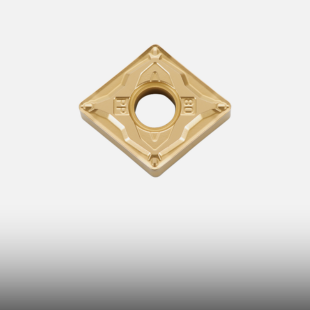
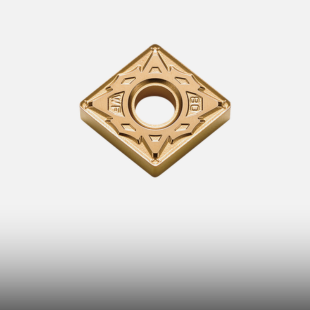
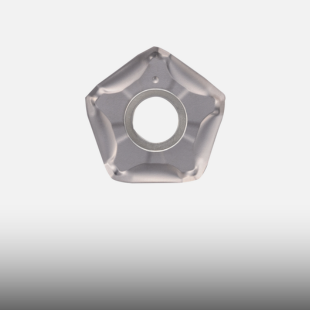
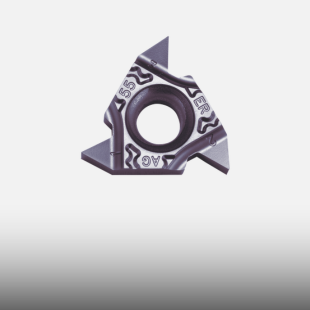
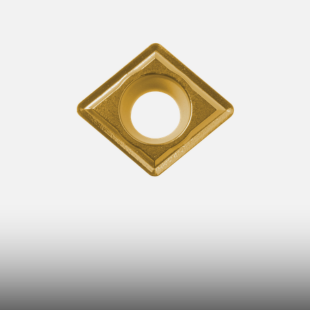
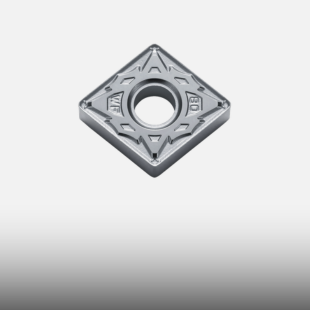
Explore our different cermet products
Where cermet fits - Five applications, five grades
High Speed Machining with CVD-Coated Cermet
Experience the performance of the CCX CVD-coated cermet in high-speed finish turning of C45 steel. Its low affinity with steel minimizes built-up edge formation, delivering a stable cutting process and an excellent surface finish.
Cutting Data
- Vc: 440 m/min
- f: 0.15 mm/rev
- ap: 0.3 mm
CCX Cermet – the cost-effective alternative for high-quality finishing.

What Makes Cermet Unique?
Cermet is a composite cutting material that combines a ceramic hard phase with a metallic binder. The hard phase consists primarily of titanium carbide (TiC) and titanium carbonitride (TiCN), which provide excellent hardness and wear resistance.
Nickel is used as the main binder due to its strong affinity with the ceramic constituents, while small amounts of cobalt are added to improve bond strength and overall toughness.
By combining the hardness and wear resistance of the ceramic phase with the toughness and fracture strength provided by the metallic binder, cermet offers an excellent balance of performance, particularly in finishing applications.

Excellent Surface Finish
Cermet is known for producing a smooth and glossy surface finish. Compared with cemented carbide, cermet has a lower tendency to form a built-up edge (BUE), where workpiece material adheres to the cutting edge during machining.
Built-up edge can cause micro-scratches on the machined surface, resulting in a matt appearance. By reducing this effect, cermet delivers a cleaner cutting action and a significantly smoother, glossier surface, making it an excellent choice for finishing operations where surface quality is critical.
Built-Up Edge vs. Surface Quality
As shown in the video, conventional carbide can generate built-up edge as material accumulates on the cutting edge. This built-up material may cause micro-scratches on the workpiece, leading to a matte surface appearance. With reduced built-up edge, cermet provides a cleaner cutting action and a superior surface finish.
Not sure if cermet is the right choice?
Tell us about your operation, workpiece material, and current tooling. We’ll assess your application and tell you honestly whether cermet is the right solution. If it is, we’ll recommend the optimal grade and cutting parameters.